
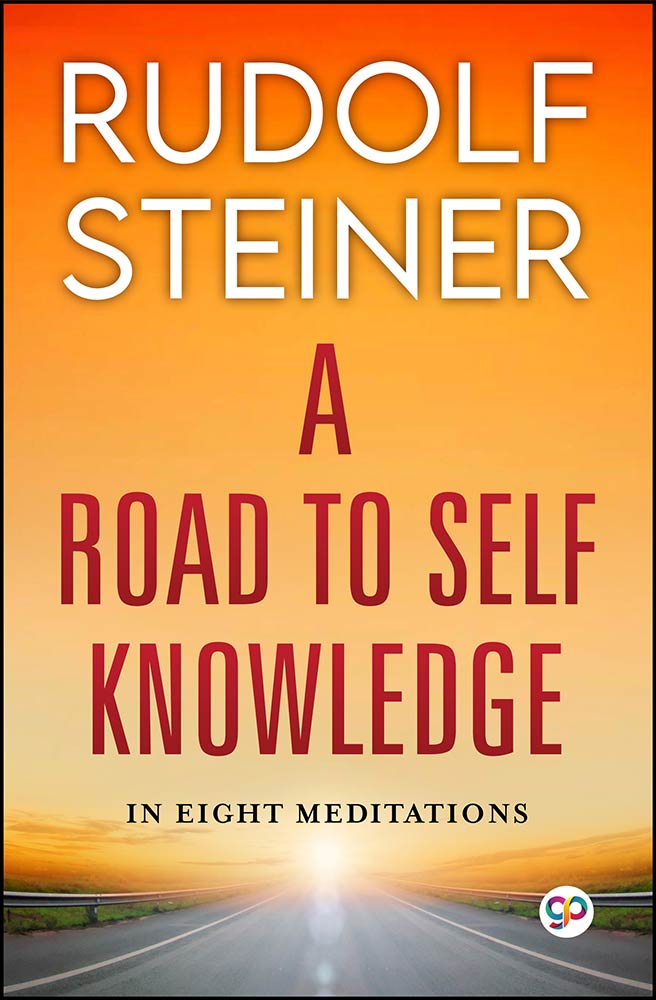
A Road to Self Knowledge (eBook)
Rudolf Steiner's classic self-help book, ‘A Road to Self Knowledge’ was first released in 1918. Austrian social reformer, philosopher, architect, esotericist, and economist Rudolf Joseph Lorenz Steiner (1861–1955). At the end of the nineteenth century, when he first rose to fame for his literary criticism, he also published "The Philosophy of Freedom" and other philosophical writings.
This book's goal is to assist readers in solving problems in their daily lives by demonstrating the best solutions for solving typical issues and providing practical and insightful life advice based on spiritualism. Included in its contents are sections titled "In which the Attempt is made to obtain a True Idea of the Physical Body," "In which the Attempt is made to form a True Conception of the Elemental or Etheric Body," "In which the Attempt is made to form an Idea of Clairvoyant Cognition of the Elemental World," "In which the Attempt is made to form a Conception of the Guardian of the Threshold," etc. This and other vintage books are getting harder to find and more expensive. This volume is being republished right now in a cost-effective, contemporary, high-quality edition that includes all of the original text and artwork.
BEST SELLERS


About the Author
Rudolf Joseph Lorenz Steiner was an Austrian occultist, social reformer, architect, esotericist, and claimed clairvoyant. Steiner gained initial recognition at the end of the nineteenth century as a literary critic and published works including The Philosophy of Freedom. At the beginning of the twentieth century he founded an esoteric spiritual movement, anthroposophy, with roots in German idealist philosophy and theosophy. His teachings are influenced by Christian Gnosticism or neognosticism. Many of his ideas are pseudoscientific. He was also prone to pseudohistory.
In the first, more philosophically oriented phase of this movement, Steiner attempted to find a synthesis between science and spirituality. His philosophical work of these years, which he termed "spiritual science", sought to apply what he saw as the clarity of thinking characteristic of Western philosophy to spiritual questions, differentiating this approach from what he considered to be vaguer approaches to mysticism. In a second phase, beginning around 1907, he began working collaboratively in a variety of artistic media, including drama, dance and architecture, culminating in the building of the Goetheanum, a cultural centre to house all the arts. In the third phase of his work, beginning after World War I, Steiner worked on various ostensibly applied projects, including Waldorf education, biodynamic agriculture, and anthroposophical medicine.
Steiner advocated a form of ethical individualism, to which he later brought a more explicitly spiritual approach. He based his epistemology on Johann Wolfgang von Goethe's world view in which "thinking…is no more and no less an organ of perception than the eye or ear. Just as the eye perceives colours and the ear sounds, so thinking perceives ideas." A consistent thread that runs through his work is the goal of demonstrating that there are no limits to human knowledge.