

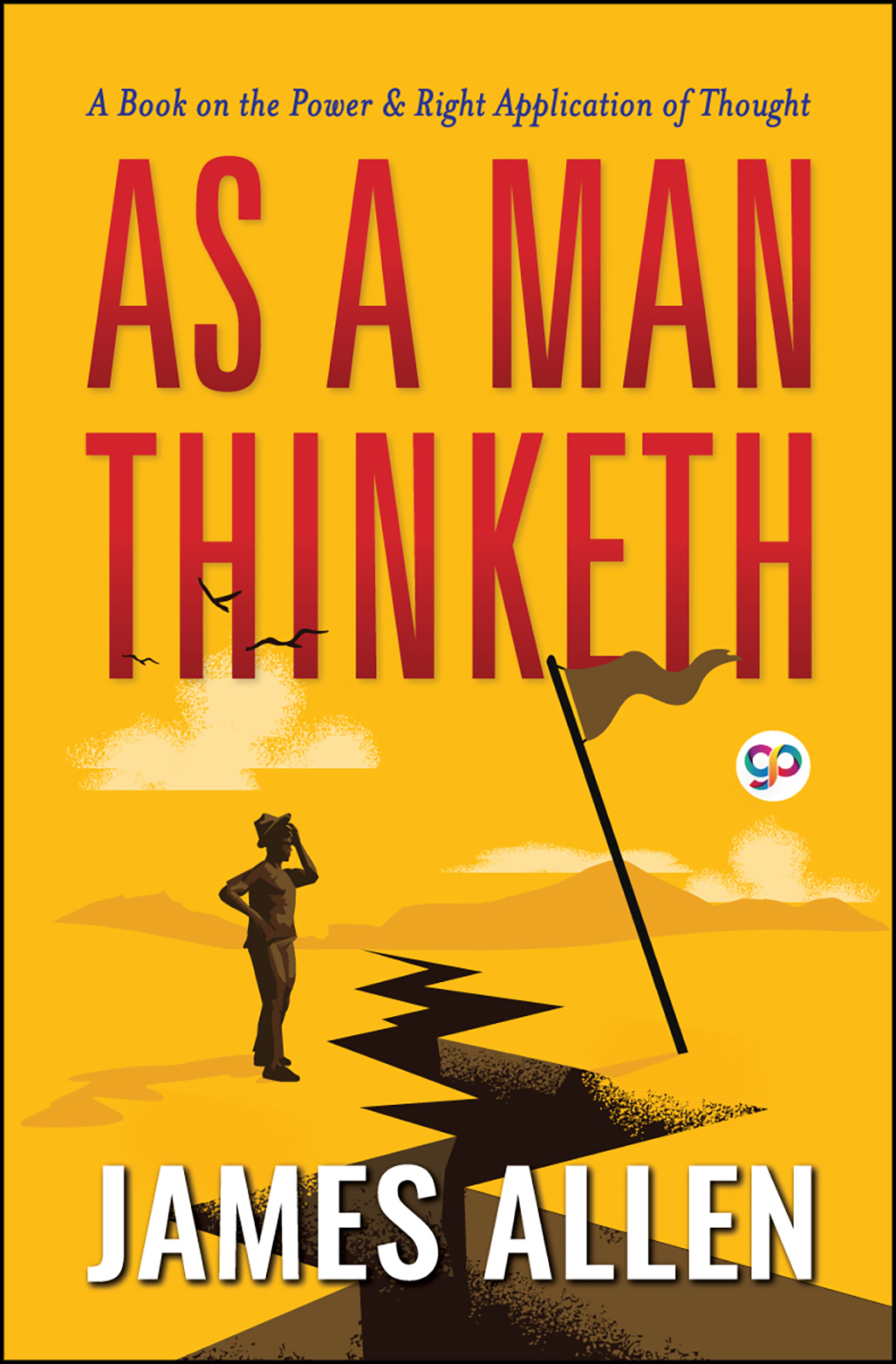
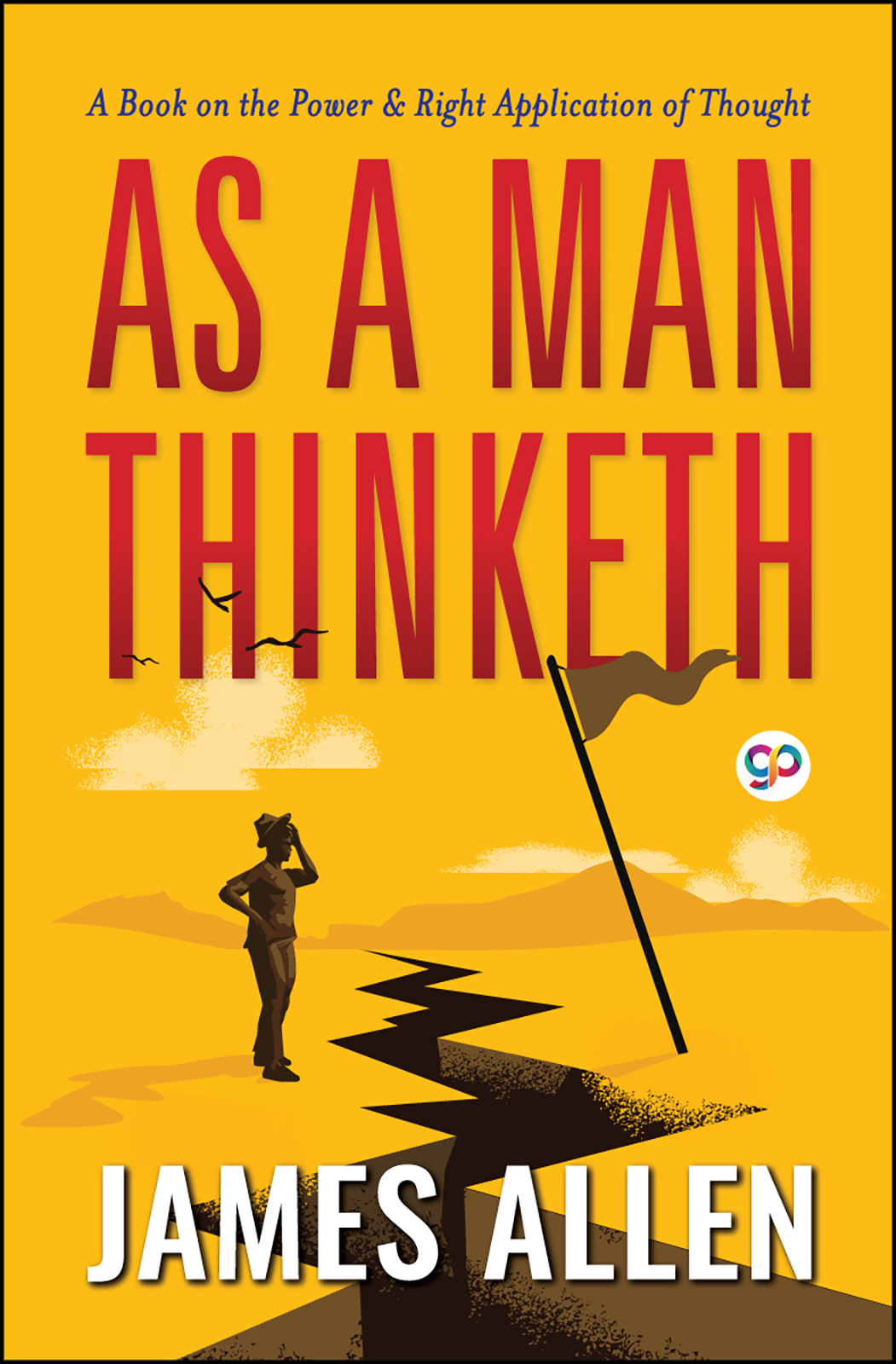
As a Man Thinketh (eBook)
Here is the classic James Allen work that has inspired millions around the world to change their lives for the better. For nearly a hundred years, Allen's words of positive thinking have provided the foundation for many of today's motivational leaders, including Norman Vincent Peale, Dale Carnegie, and Billy Graham. In this concise work, Allen offers a simple yet elegant message about the innate power of control we all possess. As a Man Thinketh provides the means to gain confidence in ourselves, to take charge of the way we perceive things and to reshape who we are to meet and conquer life's inevitable challenges.
BEST SELLERS


About the Author
James Allen (1864–1912) was an influential British philosophical writer, poet, and a recognized pioneer of the modern self-help and motivational movement. Born on November 28, 1864, in Leicester, England, Allen’s early life was marked by hardship that profoundly shaped his philosophical outlook and eventual career. His working-class background meant his formal education was cut short when his father, a factory knitter, traveled to America in 1879 to find work and was tragically robbed and murdered shortly after arrival. At just fifteen, Allen was forced to leave school to support his family, working in several British manufacturing firms, eventually rising to the position of a private secretary.
Despite the demands of work, Allen maintained a deep interest in literature, philosophy, and spirituality. This period of intellectual self-discipline led him away from his early religious background toward a more generalized spiritual and contemplative path, heavily influenced by thinkers like Leo Tolstoy and Buddhist philosophy, particularly ‘The Light of Asia’. He married Lily Louisa Oram in 1895, and by 1898, he had begun writing for the spiritual magazine ‘The Herald of the Golden Age’.
Allen's creative period was brief but immensely productive. In 1901, he published his first book, ‘From Poverty to Power’. By 1902, inspired to pursue a life of simple living and writing, Allen retired from his secretarial work. He moved with his wife and daughter, Nora, to a small, secluded cottage in Ilfracombe, Devon, where he spent the remaining nine years of his life writing and editing his own spiritual magazine, ‘The Light of Reason’ (later retitled The Epoch).
His most famous and enduring work, the philosophical essay ‘As a Man Thinketh’, was published in 1903. Loosely based on a passage from the biblical Book of Proverbs ("As a man thinketh in his heart, so is he"), the concise volume articulated Allen's core philosophy: that a person’s thoughts directly shape their character, destiny, and life circumstances. He emphasized that "Mind is the Master-power that moulds and makes," advocating for personal responsibility and the transformative potential of disciplined, noble thought. Though he never achieved great fame or wealth during his lifetime, As a Man Thinketh became a cornerstone of inspirational literature, influencing a "who's who" of later self-help authors like Napoleon Hill and Dale Carnegie. Allen produced nineteen works in total, including The Path of Prosperity and The Mastery of Destiny, before his sudden death on January 24, 1912, at the age of 47. His wife, Lily L. Allen, continued his legacy by publishing his posthumous manuscripts and editing their magazine.
Read Sample
Chapter 1 : Thought and Character
As a being of power, intelligence, and love and the lord of his own thoughts, man holds the key to every situation, and contains within himself that transforming and regenerative agency by which he makes himself what he wills.
The aphorism, “As a man thinketh in his heart so is he,” not only embraces the whole of a man’s being, but is so comprehensive that it reaches out to every condition and circumstance of his life. A man is literally what he thinks, his character being the complete sum of all his thoughts.
As the plant springs from, and could not be without, the seed, so every act of a man springs from the hidden seeds of thought, and could not have appeared without them. This applies equally to those acts called “spontaneous” and “unpremeditated” as to those, which are deliberately executed.
An act is the blossom of thought, and joy and suffering are its fruits; thus does a man garner in the sweet and bitter fruitage of his own husbandry.
Thought in the mind has made us what we are. By thought was wrought and built if a man’s mind has evil thoughts, pain comes on him as comes the wheel behind the ox… If one endure in purity of thought, joy follows him as his own shadow — sure.
Man is a growth by law, and a not a creation by artifice, and cause-and-effect is as absolute and undeviating in the hidden realm of thought as in the world of visible and material things.
A noble and God-like character is not a thing of favour or chance, but is the natural result of continued effort in right thinking, the effect of long-cherished association with God-like thoughts. An ignoble and bestial character, by the same process, is the result of the continued harbouring of grovelling thoughts.
You are Master of Your Fate
Man is made or unmade by himself; in the armoury of thought he forges the weapons by which he destroys himself; he also fashions the tools with which he builds for himself heavenly mansions of joy and strength and peace. By the right choice and true application of thought, man ascends to the Divine perfection; by the abuse and wrong application of thought, he descends below the level of the beast. Between these two extremes are all the grades of character, and man is their maker and master.
Of all the beautiful truths pertaining to the soul which have been restored and brought to light in this age, none is more gladdening or fruitful of Divine promise and confidence than this—that man is the master of thought, the moulder of character, and the maker and shaper of condition, environment, and destiny.
As a being of power, intelligence, and love, and the lord of his own thoughts, man holds the key to every situation, and contains within himself that transforming and regenerative agency by which he may make himself what he wills.
Man is always the master, even in his weaker and most abandoned state; but in his weakness and degradation he is the foolish master who misgoverns his “household”. When he begins to reflect upon his condition, and to search diligently for the Law upon which his being is established, he then becomes the wise master, directing his energies with intelligence, and fashioning his thoughts to fruitful issues.
Such is the conscious master, and man can only thus become by discovering within himself the laws of thought; which discovery is totally a matter of application, self-analysis, and experience.
Seek and You shall Find
Only be much searching and mining, are gold and diamonds obtained, and man can find every truth connected with his being, if he will dig deep into the mine of his soul.
Man is the maker of his character, the moulder of his life, and the builder of his destiny. This he may prove unerringly, if he will watch, control, and alter his thoughts, tracing their effects upon himself, upon others, and upon his life and circumstances; this he may prove by linking cause and effect by patient practice and investigation, and utilising his every experience, even to the most trivial, everyday occurrence, as a means of obtaining that knowledge of himself which is understanding, wisdom and power.
In this direction, as in no other, is the law absolute that “He that seeketh findeth; and to him that knocketh it shall be opened”; for only by patience, practice, and ceaseless importunity can a man enter the door of the Temple of Knowledge.