
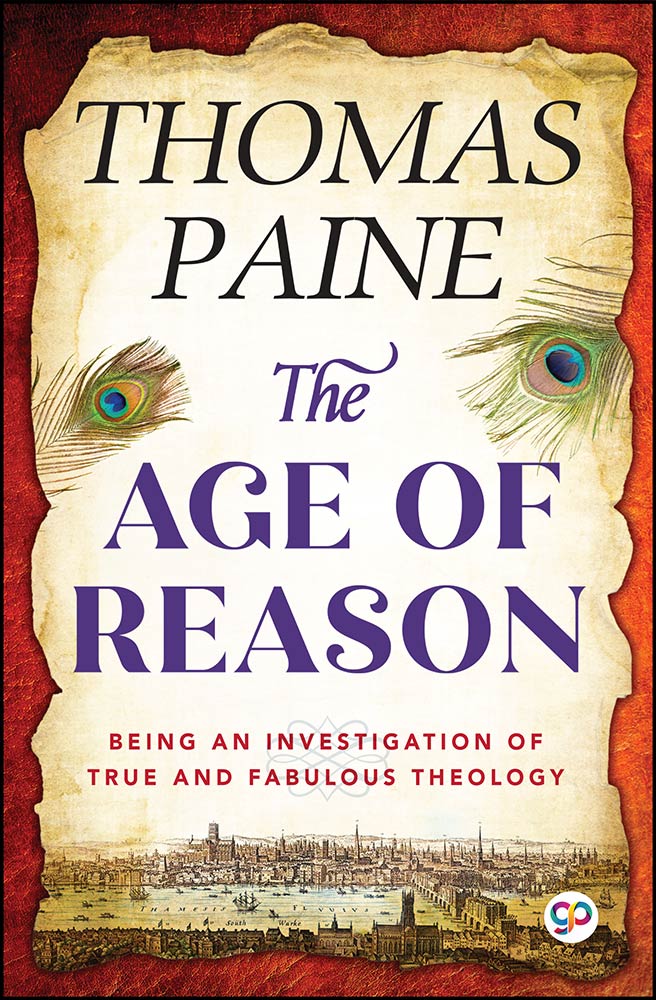
The Age of Reason (eBook)
Thomas Paine, a political activist and member of the US Constitution, argues persuasively for a logical approach to theology in ‘The Age of Reason.’ In keeping with the intellectual tradition of British Deism, Paine rejects the idea of divine revelation, claiming that "it is revelation to the first person only, and hearsay to every other." He continues by thoroughly examining the contradictions and historical errors in the Bible in order to reach the conclusion that it cannot be a work of divine inspiration. He claims that nature itself is the only true indicator of the existence of a divine creator, rejecting all organized religions in the process.
It had its first three editions published in 1794, 1795, and 1807, and it had a significant impact on the American freethinker movement. However, it was deemed seditious in Britain, where it led to the arrest of those who dared to print and distribute it.
"It is necessary to the happiness of man that he be mentally faithful to himself. Infidelity does not consist in believing, or in disbelieving, it consists in professing to believe what he does not believe."
—Thomas Paine (The Age of Reason)
BEST SELLERS


About the Author
Thomas Paine (1737–1809) was born in Thetford, England, and was brought to America by Benjamin Franklin two years before the American Revolution. An activist, philosopher, and revolutionary, Paine went on to write the two most influential works encouraging the revolution: Common Sense and the pamphlet series The American Crisis.
Following America’s independence from England, Paine moved to France in 1790, where he became a key figure in the French Revolution, writing another pro-revolutionary work, Rights of Man. In addition to his political works, Paine also wrote the deist pamphlet The Age of Reason, a challenge to both the Bible and organized religion as a whole. Unlike his other works, The Age of Reason was poorly received and led to his ostracism by the community at large. Though Paine is now considered a great figure in American history, only six people attended his funeral.