
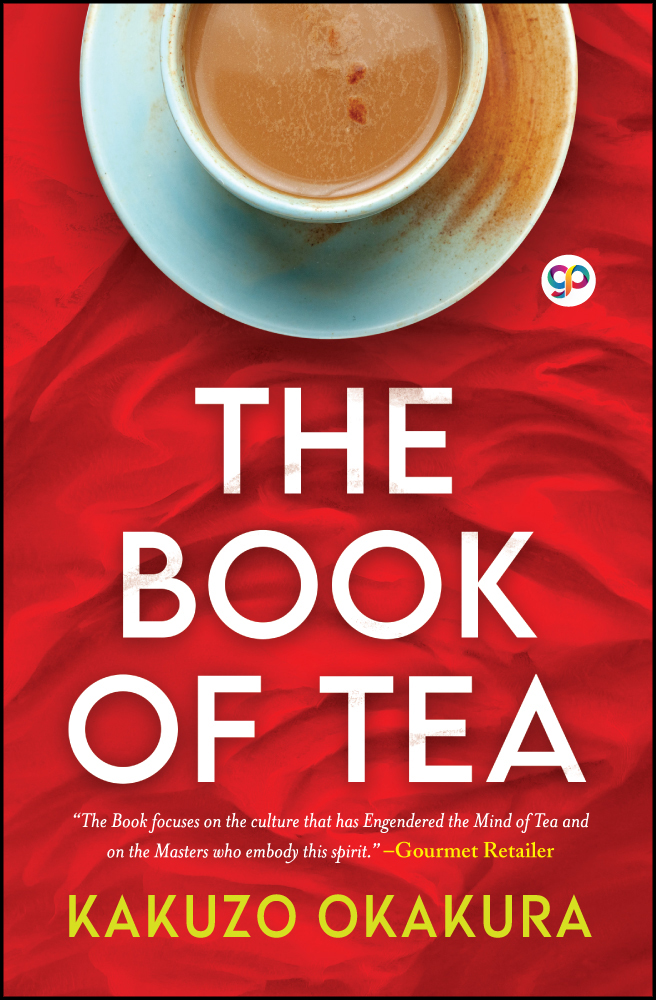
The Book of Tea (Hardcover)
An elegant and intellectual work, ‘The Book of Tea’ was written in 1906 by Kakuzo Okakura, a brilliant Japanese man with early education in English. Through his intimate knowledge of Japanese aesthetics and ability to effectively communicate them to a Western audience, Okakura is able to discuss 'Teaism' and its impact on Japanese culture, thought, and life in an informative and profound way. He develops this theory by explaining the history and universality of the tea ceremony, its inextricable connection to the Tao and Zen religions, and the importance of one's surroundings when taking tea.
This essay expounds on simplicity, nature, and art, from paintings to flower arrangements to architecture, and ends with an anecdote about one of the most famous tea masters, Sen no Rikyu. This eloquent work puts readers at ease as it explores beauty and imperfection, the subtleties of austerity, and the philosophies of monks, artists, and gardeners in ‘the way of tea’.
BEST SELLERS


About the Author
Kakuzō Okakura (1862–1913) was a Japanese scholar, art critic, and writer who played a vital role in preserving and promoting traditional Japanese art and culture during a time of rapid Westernization in Japan. Born in Yokohama, he was exposed to both Japanese traditions and Western education from a young age. He studied at Tokyo Imperial University under Ernest Fenollosa, a key figure in the appreciation of Asian art.
In his early career, Okakura helped establish the Tokyo School of Fine Arts in 1887 and later served as its principal. He was instrumental in reviving classical Japanese painting and advocating for the value of Eastern aesthetics at a time when Western influence dominated Japanese society.
During his middle years, Okakura traveled widely, forging connections with Western intellectuals and collectors. He eventually became the curator of Asian art at the Museum of Fine Arts in Boston, where he significantly expanded its collection. His most famous written work, The Book of Tea (1906), is a philosophical exploration of Japanese tea culture and aesthetics, blending Eastern and Western thought.
Okakura died in 1913 at the age of 50. His legacy lives on as a cultural bridge between East and West and as a champion of Japan’s artistic heritage.