
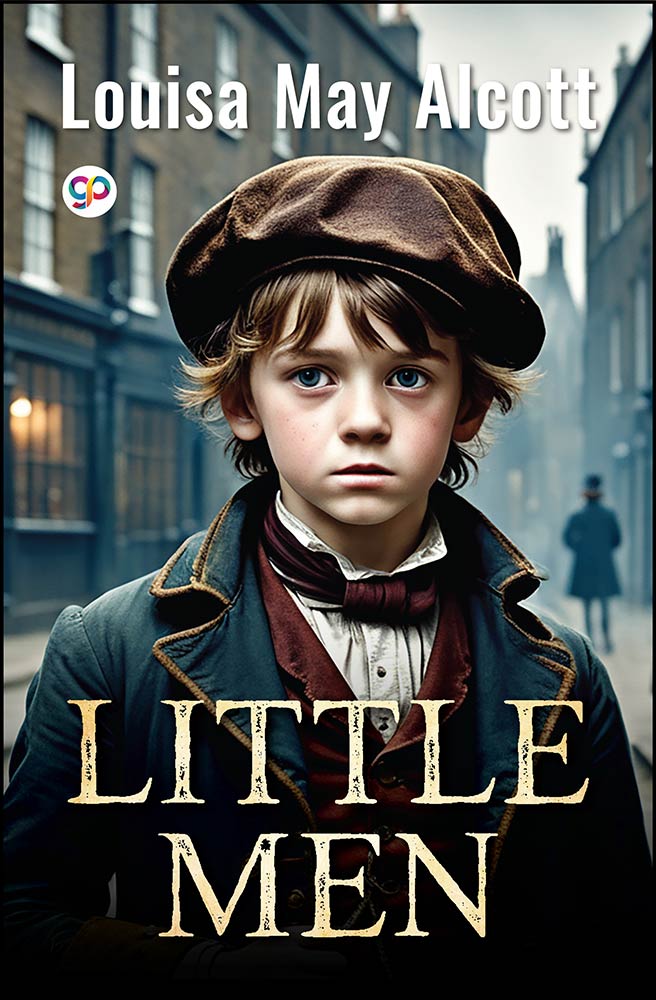
Little Men (eBook)
First published in 1871, 'Little Men' continues the beloved story of the March family, focusing on Jo March, now grown and running a boys’ boarding school at Plumfield with her husband, Professor Bhaer. Set in the idyllic countryside, the school offers a nurturing environment where boys are encouraged to grow not just in knowledge, but in character and heart.
At the center of the story are Nat, a shy orphan with a talent for music, and Dan, a rough and rebellious boy who struggles to fit in. As the boys face everyday challenges, mischief, and moral lessons, Jo and Professor Bhaer guide them with warmth, patience, and compassion. Each boy's journey reflects themes of kindness, redemption, personal growth, and the power of love to transform.
Louisa May Alcott’s expressive, heartfelt prose captures the joys and struggles of growing up. Blending humor, tenderness, and moral insight, 'Little Men' is a timeless tale of education, family, and the belief that every child deserves the chance to become their best self.
BEST SELLERS



About the Author
Louisa May Alcott was an American novelist, short story writer, and poet best known for writing the novel Little Women (1868) and its sequels Good Wives (1869), Little Men (1871) and Jo's Boys (1886). Raised in New England by her transcendentalist parents, Abigail May Alcott and Amos Bronson Alcott, she grew up among many well-known intellectuals of the day, including Margaret Fuller, Ralph Waldo Emerson, Nathaniel Hawthorne, Henry David Thoreau, and Henry Wadsworth Longfellow.
Alcott's family suffered from financial difficulties, and while she worked to help support the family from an early age, she also sought an outlet in writing. She began to receive critical success for her writing in the 1860s. Early in her career, she sometimes used pen names such as A.M. Barnard, under which she wrote lurid short stories and sensation novels for adults that focused on passion and revenge.
Published in 1868, Little Women is set in the Alcott family home, Orchard House, in Concord, Massachusetts, and is loosely based on Alcott's childhood experiences with her three sisters, Abigail May Alcott Nieriker, Elizabeth Sewall Alcott, and Anna Bronson Alcott Pratt. The novel was well-received at the time and is still popular today among both children and adults. It has been adapted for stage plays, films, and television many times.
Alcott was an abolitionist and a feminist and remained unmarried throughout her life. She also spent her life active in reform movements such as temperance and women's suffrage. She died from a stroke in Boston on March 6, 1888, just two days after her father's death.