
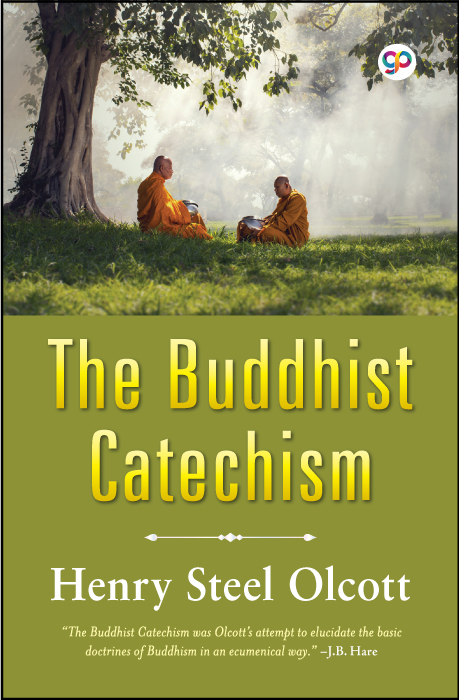
The Buddhist Catechism (eBook)
‘Buddhist Catechism’, composed in 1881, is one of Henry Steel Olcott's most enduring contributions to the revival of Buddhism in Sri Lanka and remains in use there today. The text outlines what Olcott saw to be the basic doctrines of Buddhism, including the life of the Buddha, the message of the Dharma, and the role of the Sangha. The text also treats how the Buddha's message correlates with contemporary society. Olcott was considered by South Asians and others to be a Buddhist revivalist.
Colonel Henry Steel Olcott [1832-1907] was the first western Buddhist convert, probably since antiquity. He co-founded the Theosophical Society and was its first president. The only contributor to the 19th-century southern Buddhist revival who was born a Protestant, Olcott was able to promote Eastern ideas to the western society.
"I taught you not to believe merely because you have heard, but when you believed of your own consciousness, then to act accordingly and abundantly." (See the Kālāma Sutta of the Anguttara"
— Henry Steel Olcott (The Buddhist Catechism)
BEST SELLERS


About the Author
Colonel Henry Steel Olcott (2 August 1832 - 17 February 1907) was an American military officer, journalist, lawyer and the co-founder and first President of the Theosophical Society. Olcott was the first well-known American of European ancestry to make a formal conversion to Buddhism. His subsequent actions as president of the Theosophical Society helped create a renaissance in the study of Buddhism. Olcott is considered a Buddhist modernist for his efforts in interpreting Buddhism through a Westernized lens. Olcott was a major revivalist of Buddhism in Sri Lanka and he is still honored in Sri Lanka for these efforts. Olcott has been called by Sri Lankans "one of the heroes in the struggle of our independence and a pioneer of the present religious, national and cultural revival".