
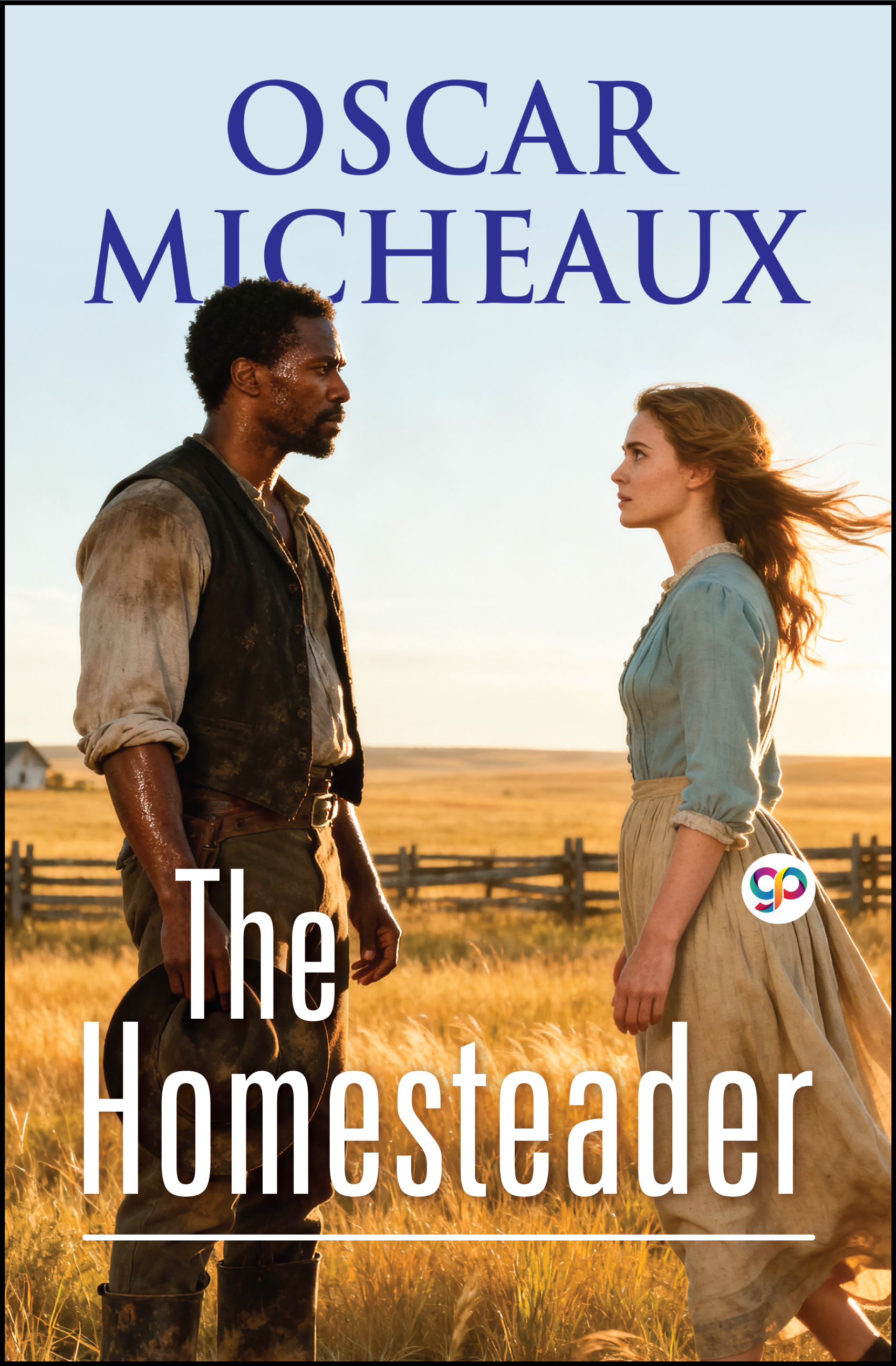
The Homesteader (eBook)
The Homesteader is a groundbreaking novel written by Oscar Micheaux and first published in 1917. Micheaux was an African American novelist, filmmaker, and one of the earliest and most influential Black voices in American cinema and literature. A self-made man who worked as a homesteader himself in South Dakota, Micheaux drew heavily from his own life experiences to create stories that explored themes of race, identity, and self-reliance in early 20th-century America.
The Homesteader tells the story of Jean Baptiste, an educated African American man who leaves the city to establish himself as a farmer on the western frontier. Seeking independence and dignity through hard work and land ownership, Baptiste faces the harsh realities of racism, isolation, and forbidden love. His relationship with a white woman, Agnes Stewart, is central to the novel’s conflict, as social prejudice and racial boundaries make their love impossible. Later, Baptiste meets Orlean McCarthy, a Black woman whose family’s moral hypocrisy and religious fanaticism cause further suffering.
Through Baptiste’s struggles, Micheaux portrays the pursuit of the American Dream from a Black perspective, challenging the racial barriers and injustices of his time. The novel reflects his belief in self-determination, moral strength, and racial pride, advocating that progress could be achieved through education, discipline, and economic independence.
Rich in autobiographical detail, The Homesteader also served as the basis for Micheaux’s 1919 silent film of the same name, one of the first feature-length films made by an African American director.
Both as a novel and a cultural milestone, The Homesteader holds a vital place in African American literary history. It stands as a testament to Micheaux’s pioneering vision — a powerful story of perseverance, love, and the unyielding quest for equality and self-respect on the American frontier.
BEST SELLERS


About the Author
Oscar Micheaux was a groundbreaking African American novelist, filmmaker, and entrepreneur, widely regarded as the first major Black feature filmmaker in American history. He was born on January 2, 1884, in Metropolis, Illinois, to former enslaved parents. Raised in a large family, Micheaux developed a strong work ethic early in life and later moved to South Dakota, where he became a homesteader — an experience that deeply influenced his writing.
His first novel, The Conquest: The Story of a Negro Pioneer (1913), was a semi-autobiographical work that explored racial identity and perseverance. He followed it with The Homesteader (1917), which he later adapted into a film in 1919, marking his debut as a filmmaker. This made him the first African American to produce and direct a feature-length film. Over the next three decades, Micheaux wrote, produced, and directed more than 40 films, including Within Our Gates (1920), Body and Soul (1925), and The Exile (1931), addressing themes of racial injustice, ambition, and self-reliance.
Micheaux’s works challenged racial stereotypes and gave voice to Black experiences during the early 20th century. His independent spirit paved the way for future generations of Black filmmakers. He died on March 25, 1951, in Charlotte, North Carolina, leaving an enduring legacy as a visionary artist and pioneer.