
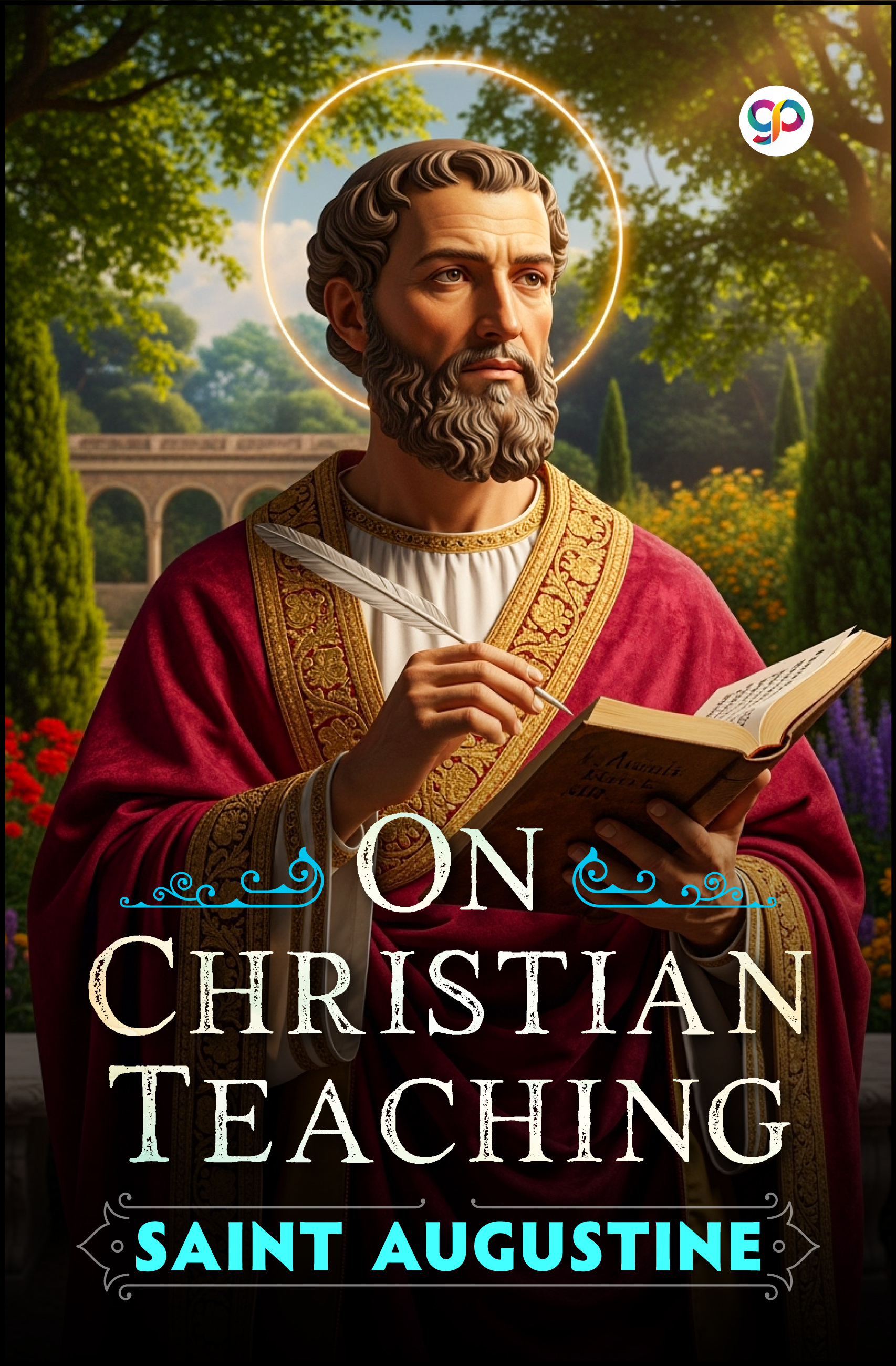
On Christian Teaching (eBook)
On Christian Teaching (Latin: De Doctrina Christiana) is a theological and philosophical work by Saint Augustine of Hippo, written between 397 and 426 AD. Augustine, one of the most influential figures in early Christianity and Western philosophy, was a North African bishop, theologian, and writer whose ideas profoundly shaped Christian doctrine and medieval thought.
This book serves as a guide for interpreting and teaching the Scriptures, written to help Christian preachers and readers understand the divine truths contained in the Bible. Augustine divides the work into four books: the first three focus on how to interpret Scripture, while the fourth discusses how to communicate those interpretations effectively. His aim is to equip believers with the tools to read the Bible not just literally, but with wisdom and spiritual discernment.
In the first part, Augustine explains the difference between things (the divine truths that should be loved and sought) and signs (the words and symbols that point to those truths). He teaches that Scripture must be read with humility and love, as all knowledge of God ultimately leads to charity — the highest Christian virtue. The second and third books guide readers through the complexities of biblical language, symbolism, and figurative expression, urging careful study of history, languages, and logic. The fourth book turns to rhetoric and preaching, advising teachers to speak with clarity, sincerity, and compassion so that truth may move the hearts of listeners.
On Christian Teaching stands as one of the earliest and most influential works on biblical hermeneutics — the art of interpretation. It bridges faith and reason, offering a thoughtful framework for understanding Scripture and conveying its message with love. Even today, Augustine’s insights continue to influence theology, philosophy, and education within the Christian tradition.
BEST SELLERS


About the Author
Early church father and philosopher Saint Augustine served from 396 as the bishop of Hippo in present-day Algeria and through such writings as the autobiographical Confessions in 397 and the voluminous City of God from 413 to 426 profoundly influenced Christianity, argued against Manichaeism and Donatism, and helped to establish the doctrine of original sin. An Augustinian follows the principles and doctrines of Saint Augustine.
People also know Aurelius Augustinus in English of Regius (Annaba). From the Africa province of the Roman Empire, people generally consider this Latin theologian of the greatest thinkers of all times. He very developed the west. According to Jerome, a contemporary, Augustine renewed "The Ancient Faith."
The Neo-Platonism of Plotinus afterward heavily weighed his years. After conversion and his baptism in 387, Augustine developed his own approach to theology and accommodated a variety of methods and different perspectives. He believed in the indispensable grace to human freedom and framed the concept of just war. When the Western Roman Empire started to disintegrate from the material earth, Augustine developed the concept of the distinct Catholic spirituality in a book of the same name. He thought the medieval worldview. Augustine closely identified with the community that worshiped the Trinity. The Catholics and the Anglican communion revere this preeminent doctor. Many Protestants, especially Calvinists, consider his due teaching on salvation and divine grace of the theology of the Reformation. The Eastern Orthodox also consider him. He carries the additional title of blessed. The Orthodox call him "Blessed Augustine" or "Saint Augustine the Blessed."